
By Imlaak Editorial Team
A property should have a clear job in your life. You might want a place for family holidays, an asset with a potential rental role, or an investment you can own with professional support while living abroad. Those objectives deserve attention before you compare floor plans or discuss a payment schedule.
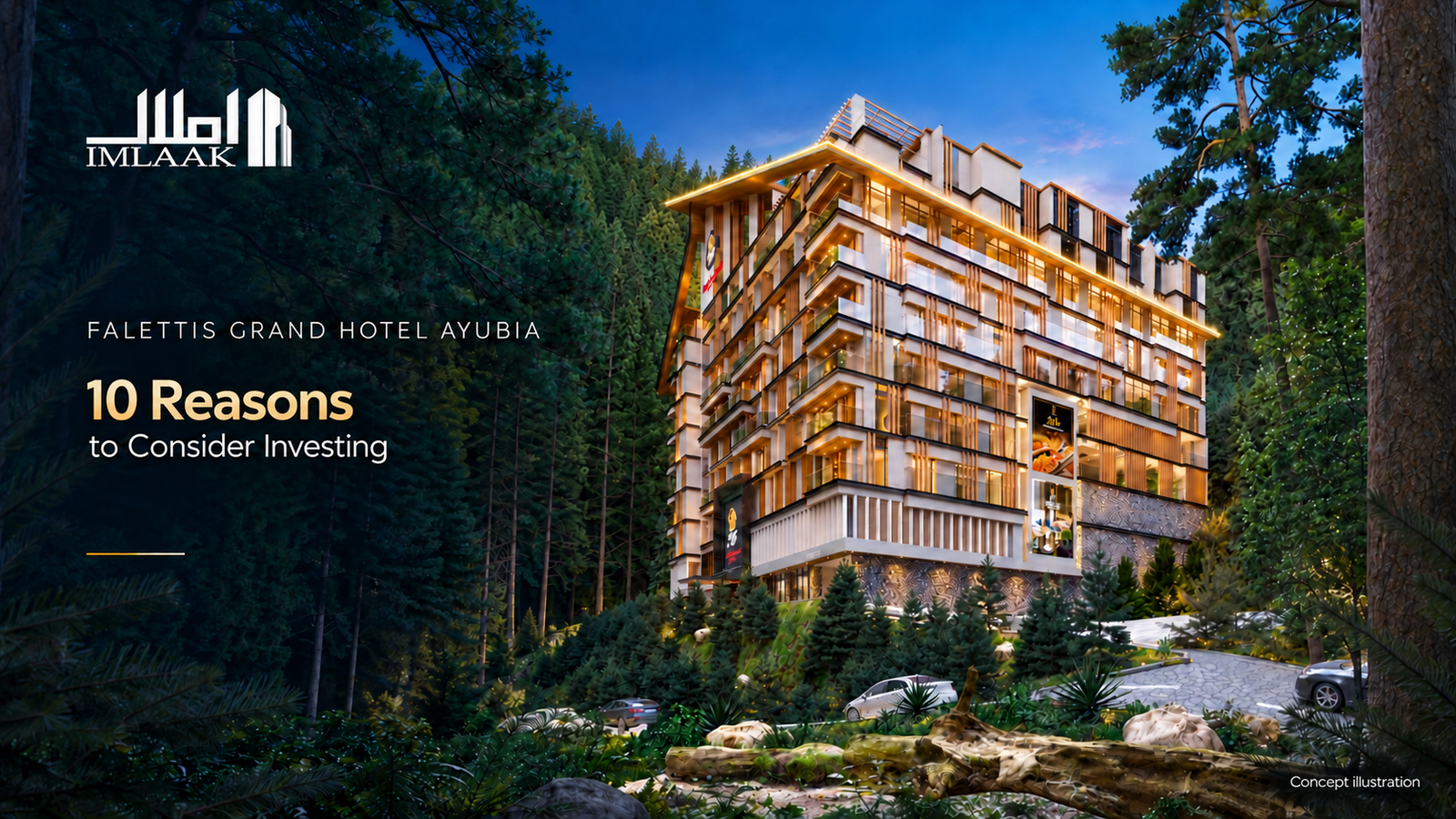
Falettis Grand Hotel Ayubia brings several of these questions together. Its mountain-hospitality setting, accommodation concepts and planned shared facilities make it worth examining as a complete ownership proposition. The important question is how a particular unit, its operating arrangements and its total cost fit your plans.
Here are ten reasons to look more closely, with the practical checks that give each one meaning. Planned facilities should be confirmed against the latest project information; their inclusion here does not establish that the hotel or an amenity is already operational.
1. A recognisable reason for guests to visit
A hospitality investment starts with the guest. Who would stay here, what would they value, and why would they return?
At Falettis Grand Hotel Ayubia, the proposed experience centres on a mountain break: time away with family, views, and accommodation supported by hospitality services. That gives an investor something tangible to evaluate. A couple planning a weekend and a family arranging a longer holiday will have different expectations, but both need a stay that feels worthwhile.
Look beyond the destination name when assessing the unit. Consider its outlook, privacy, access, parking arrangements and connection to shared spaces. Ask how the proposed experience compares with accommodation the same guest could choose nearby. A convincing answer is a useful foundation for the investment discussion; actual demand still needs evidence.
2. Accommodation that can match different ownership goals
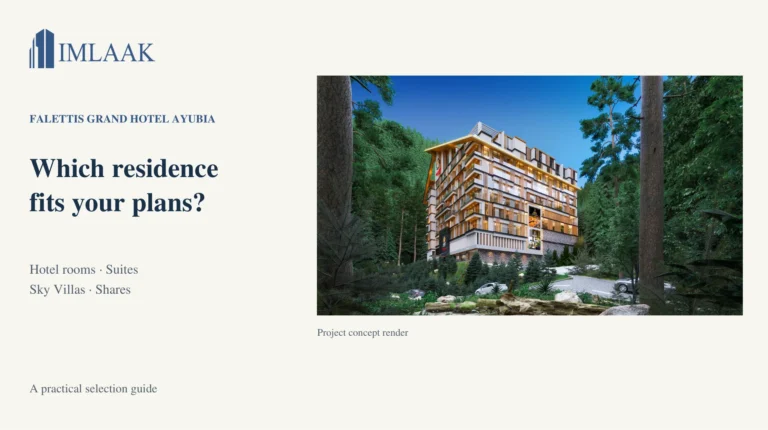
The project discussion includes hotel rooms, suites and larger residence concepts. This creates a useful starting point for choosing according to purpose rather than simply buying the largest space available.
For a rental-focused investor, the priorities might be total capital committed, the guest segment and running costs. A family expecting longer visits may care more about bedrooms, living space and privacy. Neither brief can be answered by a price per square foot alone.
Compare the exact floor plan, usable and saleable area, furnishing requirements and management terms. A share-based offer also needs a clear explanation of the interest being purchased and how use, income and resale rights work. Ask for a dated proposal for a specific unit or interest; a product category does not establish current availability.
Give the property a purpose before choosing the unit.
3. Planned amenities that could make a stay more complete
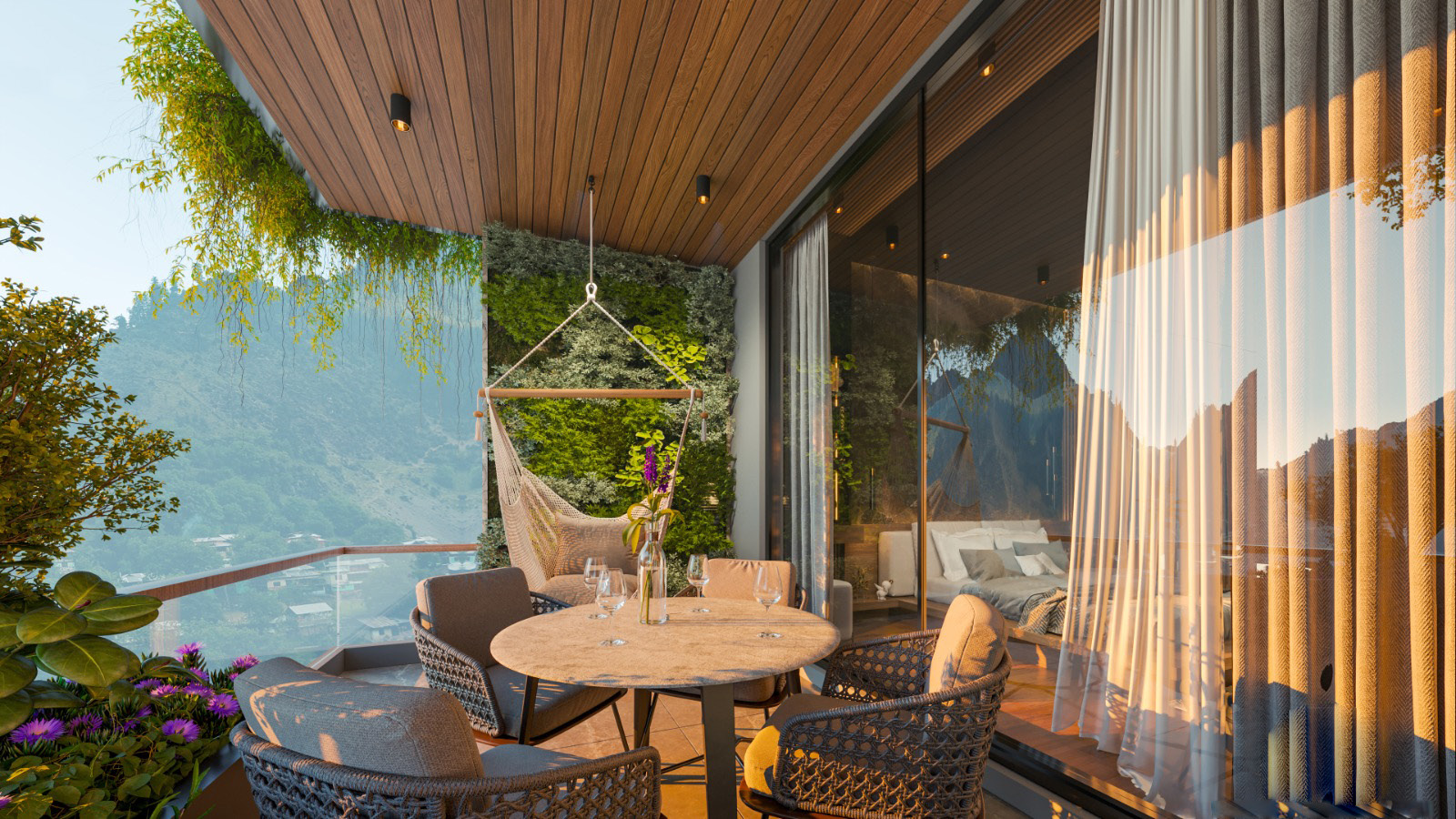
The planned amenity mix includes dining and coffee spaces, a temperature-controlled swimming pool, a shared gym and spa, a cinema, a children's play area and a business lounge. These features are relevant because they could make the property useful at different moments in a guest's day.
A family may appreciate an indoor activity between outings. A couple might value an unhurried meal. Someone staying longer may want an exercise routine and a place to catch up on work. The quality of those everyday experiences matters more than the length of the amenity list.
Check which facilities are planned, completed and open, as well as their access rules and charges. Maintenance, staffing and operating hours affect how much value they actually provide. Our Falettis amenities and lifestyle guide explores the proposed experience in more detail.
4. An ownership conversation that continues beyond purchase
Hospitality property needs ongoing attention. Before handover, investors need clear construction updates and payment records. Afterwards, they need to understand operational readiness, maintenance, reporting and the decisions that require their approval.
Imlaak's stated role as a strategic asset-management and investment-management partner with Abdullah Developers provides a basis for that conversation. Its practical value should be set out in the services agreed for your purchase: who follows up, what information you receive, what it costs and how concerns are escalated.
Keep investor oversight and day-to-day hotel operations clearly defined. The people handling guest check-in may have different responsibilities from those helping you assess the asset. Knowing who is accountable for each part makes it easier to evaluate the support being offered and to use it effectively.
5. A potential income role that can be examined properly
A hospitality unit may generate operating income when it is ready, available to rent and occupied by paying guests. This can be relevant to buyers who want income to form part of their property strategy.
Start with occupied nights and the average room rate actually achieved. Then follow the money through operating expenses, the agreed allocation and any other applicable deductions. A headline revenue figure says little about what reaches the owner without those steps.
Ask for evidence behind the assumptions and a slower-period scenario. Discounts, cancellations, maintenance downtime and your own stays can change the outcome. The income opportunity becomes easier to assess when you can see what drives it, what costs must be covered and when distributions might begin. Handover, opening and the first owner payment should be treated as separate milestones.
6. A rental illustration you can test yourself
An understandable model lets you challenge the assumptions instead of relying on one attractive monthly number. Here is a simplified example using the discussed allocation: deduct 40% operating costs, then allocate 70% of the remaining rental income to the owner.
Assume a nightly rate of PKR 30,000 and 60% occupancy over a 30-day month. This gives 18 occupied nights and PKR 540,000 in gross room revenue. Deducting the assumed PKR 216,000 operating costs leaves PKR 324,000. The owner's 70% allocation would be PKR 226,800. The remaining 30%, or PKR 97,200, is the operator-management allocation in this illustration.
Now reduce occupancy to 40%, keeping the other assumptions unchanged. Twelve occupied nights produce PKR 360,000 gross revenue; the same calculation gives an owner allocation of PKR 151,200. That simple change shows why occupancy deserves as much attention as the advertised room rate.
These are hypothetical calculations, not current room rates, achieved occupancy or promised payments. Actual expenses may behave differently, especially at lower occupancy. Confirm which charges the cost allowance includes and whether taxes, reserves or any additional fees apply before treating an allocation as spendable income. A 30-day illustration also cannot establish an annual yield.
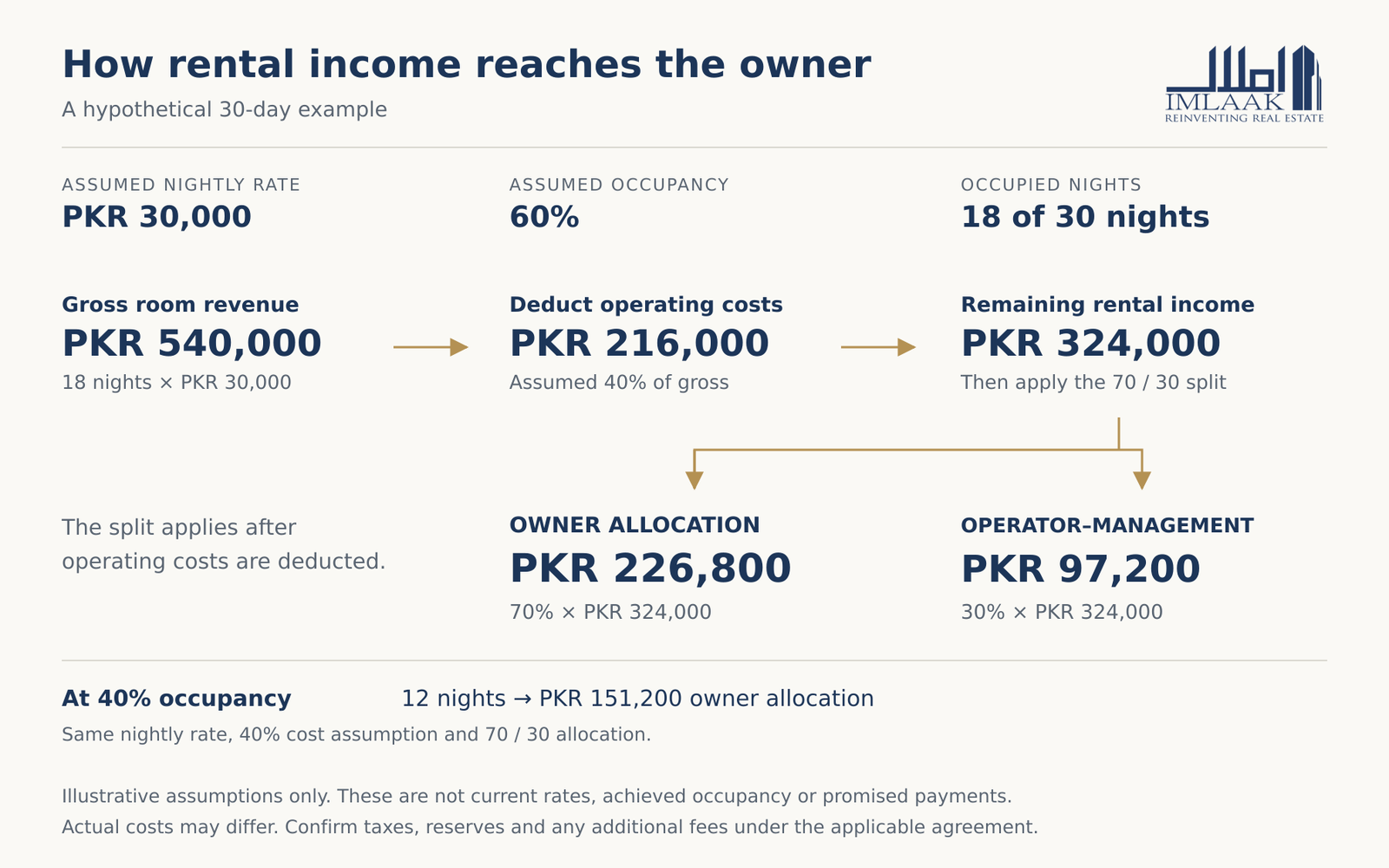
Follow the cash flow from the guest's payment to the owner's distribution.
7. The possibility of combining personal use with ownership
A property that your family expects to visit can have a personal purpose alongside its financial role. For some buyers, the appeal is returning to a familiar setting and having a regular place for time together.
That value is worth recognising openly. Decide how often you would realistically use the accommodation and whether its layout suits the people travelling with you. An occasional couple's weekend and an extended family stay require different choices.
Then review the exact owner-use agreement. Check how dates are reserved, any peak-period restrictions, cleaning or service charges and whether the arrangement differs by unit category. Nights used by the family may no longer be available to paying guests. Keep those dates out of the rental forecast so that personal enjoyment and income are assessed honestly together.
8. A framework for managing ownership from abroad
For an overseas buyer, practical support can matter as much as the physical property. Limited time in Pakistan makes it useful to have agreed local responsibilities and a clear way to review progress.
Before committing, ask to see the reporting you would receive. During development, that may mean dated updates and a record of outstanding obligations. During operations, useful reporting would explain occupancy, receipts, costs, maintenance and distributions. Confirm the actual service, frequency and access arrangements rather than assuming that every buyer receives the same package.
You should also know who can approve expenses, how exceptions are handled and whom to contact when information is missing. Remote ownership still involves decisions. A well-defined management arrangement can make those decisions more organised while keeping the owner's rights and responsibilities visible.
9. A chance to compare the full ownership proposition
Falettis deserves assessment as a combination of property, services, payment obligations and operating arrangements. Looking at those elements together can reveal which option is genuinely manageable for you.
Put the total acquisition and setup cost beside the payment schedule. Clarify furnishing, maintenance, management charges and other applicable costs. Leave room for delays or additional expenditure instead of committing every available rupee to the purchase price.
If a rental guarantee, discount or buyback is offered, obtain the terms for that exact offer. Identify the responsible party, calculation basis, start date, payment timing, eligibility and exit conditions. Keep contractual payments separate from projected operating income, and do not add them together without explicit documentary support. A conditional buyback also deserves separate consideration from an ordinary resale to a new buyer.
10. A property that can be judged against your wider plan
The strongest reason to consider any property is its fit with your own goals. Falettis may be relevant to someone seeking a mountain-stay option, hospitality exposure or professionally supported ownership. The right answer depends on their existing commitments, income needs and time horizon.
Consider how long you can hold the asset without needing to sell. Ask how a resale would work, what approvals or charges may apply and who the likely next buyer would be. A higher paper valuation has limited practical value if you need cash before a suitable purchaser is available.
Compare the proposal with realistic alternatives, including retaining liquidity. A useful investment conversation should leave you able to explain why you selected this asset, what could go wrong and what would cause you to reconsider. That clarity is valuable long after the initial purchase.
Define success before committing your capital.
Five questions to settle before deciding
Bring these questions to your next discussion or site visit:
- What exactly am I buying, and which documents establish the rights and obligations attached to it?
- What is the current construction, handover and operating position for this specific unit?
- What is my total commitment, including setup, recurring charges and payment dates?
- Who manages each part of ownership, and what information and approvals will I receive?
- How do personal use, rental income, any contractual offer and eventual resale work together?
For the ownership documents, approvals and tax position, obtain advice from appropriately qualified professionals. Marketing material is a starting point for questions; the applicable agreements and supporting evidence need their own review.
Frequently asked questions
Is Falettis Grand Hotel Ayubia already operational?
This article does not confirm an opening date or operating status. Ask for a current, dated update covering the selected unit, handover and the facilities you expect to use.
Does the rental example show what I will earn?
No. It illustrates how assumed revenue and deductions work. Your outcome depends on actual performance, costs, availability for rental and the applicable agreement.
Can I stay in my property and receive rental income?
That depends on the owner-use and management terms for the product you buy. Confirm permitted stays, booking rules, charges and how personal use affects rental availability.
Is a buyback the same as being able to sell whenever I choose?
A buyback depends on its documented conditions and the responsible party's ability to perform. An ordinary resale depends on finding a buyer and completing the applicable transfer process. Review both routes before relying on an exit.
Start with your purpose
Falettis Grand Hotel Ayubia offers a useful set of questions for buyers interested in mountain hospitality ownership. Explore the accommodation, the planned guest experience and the management structure, then test them against your budget and intended use.
Ask Imlaak for the latest project information and a unit-specific discussion. The aim is a property decision you understand fully, with a clear purpose, realistic expectations and documented responsibilities.
WhatsApp: +92 300 2049911
Consultations: +92 333 1616160 / +92 300 2047878
Educational information only. This article is not a personalised investment recommendation or an assurance of returns.