
Serviced Apartments vs Hotel Apartments in Pakistan: Which Is Better for Passive Income?
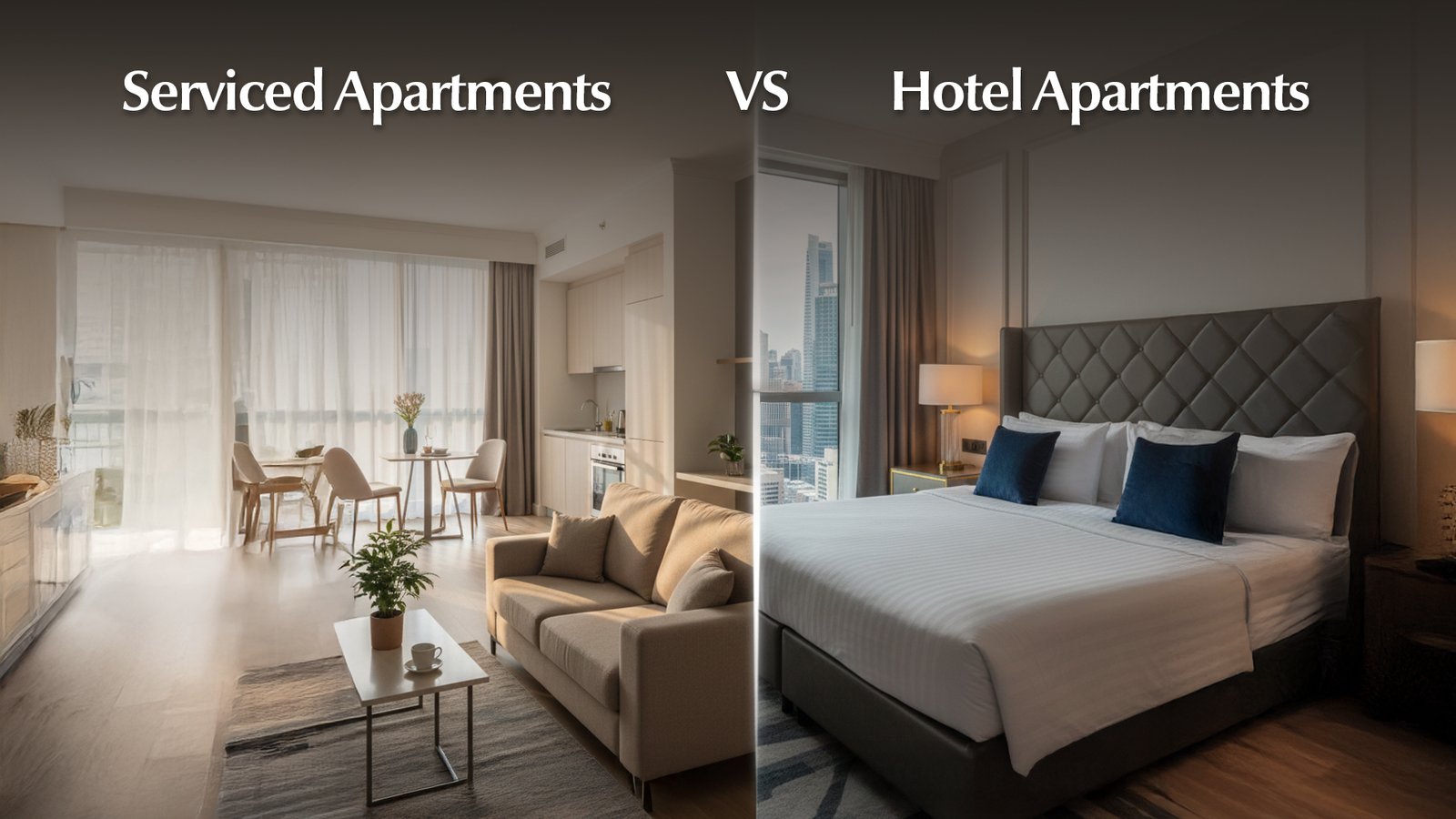
If you’ve ever tried to “invest for passive income” in Pakistan, you already know the emotional rollercoaster:
- One person says, “Serviced apartments are the future—Airbnb alternative Pakistan!”
- Another says, “No, hotel apartments are better—brand name, higher occupancy rate!”
- A third person whispers, “Bas guaranteed return le lo.” (And that’s usually where problems start.)
Here’s the truth most beginners learn late: real estate passive income isn’t passive until your deal structure is clean and your management is competent. In Pakistan, that matters even more because documentation standards, operator transparency, and “surprise charges” vary wildly from project to project.
So in this guide, we’ll settle the real debate:
Serviced Apartments vs Hotel Apartments in Pakistan — which is better for passive income?
Not with hype. With practical comparisons, simple math, Pakistan-specific realities, and a decision framework you can actually use—even if you’re investing your first 40–80 lakh or your first 2–3 crore.
And I’ll say this upfront: there is no universal winner. The better option depends on:
- what kind of cashflow you need (stable vs seasonal),
- your risk tolerance,
- your city/market (Islamabad vs Lahore vs Murree/Galiyat),
- and—most importantly—who manages the property and how they report and pay you.
Let’s break it down properly.
2) Quick definitions (and where Pakistan investors get confused in Serviced Apartments vs Hotel Apartments )
What is a serviced apartment?
A serviced apartment is typically a furnished (or semi-furnished) apartment designed for short-to-medium stays, offering “hotel-like” conveniences such as housekeeping, reception/help desk, maintenance support, security, and sometimes utilities/internet bundled.
In Pakistan, serviced apartment investment often shows up in two common formats:
- You own the unit and either self-manage (rare) or hire a management company.
- You own the unit but the building runs under a centralized short-term rental/property management model (more common in premium projects).
Think of it like this:
Serviced apartment = apartment DNA + hospitality operations.
What is a hotel apartment?
A hotel apartment usually sits closer to a hotel in operations and branding. The building is run like a hotel, often with:
- brand standards,
- centralized reception,
- room inventory control,
- hotel-style pricing and promotions,
- and a stricter “you can’t just do whatever you want” management setup.
Your unit may be part of a managed pool (depending on the contract), and your income might be structured like:
- revenue share,
- pooled rental distribution,
- or a defined payout schedule tied to operator reporting.
Think:
Hotel apartment = hotel DNA + apartment-style layout.
Where Pakistan investors get confused to understand Serviced Apartments vs Hotel Apartments
Because marketing in Pakistan blends terms freely:
- “serviced,” “hotel,” “executive suites,” “condotel,” “managed apartments”—all get used in the same brochure.
- Some projects sell “hotel apartments” but operate like normal apartments with weak management.
- Others sell “serviced apartments” but lock you into hotel-style contracts.
So the real question is not the label. It’s this:
Who controls the rental model, who controls pricing, who pays the bills, and how transparent is the reporting?
Now let’s compare properly.
3) Comparison table (10+ rows): serviced vs hotel apartments for passive income
Below is the practical comparison investors in Pakistan should care about.
| Factor | Serviced Apartments | Hotel Apartments |
| Ownership model | Often individual unit ownership; sometimes fractional/co-ownership possible | Often individual unit ownership but operations run like a hotel; sometimes pooled income |
| Control (your control) | Usually more control (depending on contract): can switch strategies (long-stay/short-stay) | Usually less control: operator sets rules, pricing, guest policies |
| Rental model | Can be long-stay (corporate), mid-stay, or short-term rental Pakistan | Primarily short-stay / hotel-style nightly bookings |
| Property management | Critical—can be great or weak; varies widely in Pakistan | Usually centralized hotel operator; can be stronger systems but contract-heavy |
| Operating expenses | Sometimes owner pays utilities/maintenance; sometimes bundled | More likely bundled into operations (but check fee layers carefully) |
| Vacancy risk | Can be reduced by switching to long-stay tenants in slow periods | More exposed to seasonality if market is tourism-driven |
| Seasonality | Moderate in cities; high in tourism hubs | Often higher—hotel demand swings with events/tourism cycles |
| Pricing power (ADR) | Good if location + management + reviews are strong | Often higher ADR potential with brand/distribution, but depends on demand |
| Furnishing costs | Sometimes on investor; sometimes included in package | Often stricter brand-standard furnishing; may be included or charged |
| Target guest profile | Corporate stays, families, medical travel, relocations | Tourists, business travelers, events, brand-loyal guests |
| Resale / liquidity | Can be easier if it’s “apartment-first” and market recognizes it as a residential asset | Can be trickier: resale depends on operator reputation + contract terms |
| Legal/contract complexity | Moderate; depends on management agreement | Higher: revenue share clauses, pooled income, brand rules, deductions |
| Taxes/withholding (high-level) | Rental income generally taxable; documentation + invoices matter | Same, but operator may handle collection/reporting—verify clarity |
| Maintenance & CAPEX | Maintenance reserve may be separate; quality varies | More frequent upgrades/refurb cycles possible (hotel standards) |
| Transparency of reporting | Varies: some provide dashboards, some provide “trust me bro” statements | Often better systems—but only if operator is reputable and contract enforces audit/reporting |
- If you value flexibility and “I want options,” serviced apartments often feel safer.
- If you value “professional hotel distribution” and accept tighter control, hotel apartments can work—if the operator is solid and the contract is clean.
Now let’s talk money like grown-ups—simple passive income math.

4) Passive income math (simple + beginner-friendly)
Passive income from both models comes from the same engine:
- Occupancy rate: out of 30 nights, how many nights are booked?
- ADR (Average Daily Rate): average nightly rent (or per-night room rate).
- Seasonality: some months are peak, some are dead.
- Costs & fees: management fee, utilities, cleaning, repairs, marketing commission, reserve fund.
A simple monthly model:
Gross Revenue = (Nights booked) × (ADR)
Net Income = Gross Revenue − (All fees + operating costs + reserves)
And this is where Pakistan investors get trapped:
They hear a gross number and forget to ask, “Net kitna bachta hai?”
What investors should always ask for (non-negotiable)
- Is the income you’re quoting gross or net?
- What is the full fee stack (management fee, platform commission, marketing, utility, linen, cleaning, front desk, repairs)?
- Do you deduct a maintenance reserve / CAPEX reserve?
- What’s the payout schedule (monthly/quarterly)? Is it based on cash collected or invoices booked?
- How do you report occupancy rate and ADR? Can you audit?
Two illustrative examples in PKR (hypothetical, not a promise)
Illustrative Example A: Serviced apartment in Lahore (urban demand, mixed stays)
- Purchase price: PKR 1.50 crore (illustrative)
- Average ADR: PKR 16,000/night (illustrative)
- Average occupancy: 60% (18 nights/month) (illustrative)
Gross monthly revenue:
18 nights × 16,000 = PKR 288,000
Typical cost stack (illustrative):
- Management + operations fee: 20% = 57,600
- Utilities/internet/consumables: 18,000
- Cleaning/linen/minor repairs reserve: 12,000
- Building maintenance/service charges: 15,000
Estimated net (illustrative):
288,000 − (57,600 + 18,000 + 12,000 + 15,000)
= PKR 185,400/month
That’s a net monthly yield of ~1.24% of capital before taxes and vacancy shocks (illustrative).
But remember: this becomes meaningful only if reporting is honest and management is consistent.
Illustrative Example B: Hotel apartment in Murree/Galiyat (seasonal tourism, peak spikes)
- Purchase price: PKR 2.20 crore (illustrative)
- Peak season ADR: PKR 28,000/night (illustrative)
- Off-season ADR: PKR 14,000/night (illustrative)
- Peak occupancy: 80% (illustrative)
- Off-season occupancy: 35% (illustrative)
Let’s average it simply across the year (rough illustration):
- 4 peak months: 24 nights × 28,000 = 672,000/month gross
- 8 off-peak months: 10 nights × 14,000 = 140,000/month gross
Now costs (illustrative):
- Hotel operator + distribution + operations: 30%
- Plus reserve fund / refurbishment: 5–10%
- Plus service charges, etc.
Reality: You might see amazing months and very dull months. The annual average can still be attractive—but your cashflow is less predictable.
This is the core difference for passive income Pakistan:
- Serviced apartments often aim for steady occupancy through mixed demand (corporate + long-stay + short-stay).
- Hotel apartments often chase higher ADR and brand distribution, but accept seasonality.
ROI vs IRR
- ROI is the simple “what you earn vs what you invested.”
- IRR factors in timing: when you pay installments, when you start earning, and how cashflow changes over time.
If a project is sold on installments, IRR can look better on paper because your full money wasn’t deployed on day one. That’s not bad—it just means you must compare apples to apples and ask for cashflow schedule.
Now, let’s bring it home with the Pakistan reality check.
5) Pakistan-specific reality check (cities, demand, and risks)
A quick macro snapshot (why hospitality demand matters)
Pakistan’s “accommodation and food services” sector is meaningful and growing, but it’s also cost-sensitive (electricity, wages, operations).
PACRA’s sector research (Hotel & Lodging) notes an estimated market size for “Accommodation and Food Services Activities” around PKR ~1,755 billion in FY25 and a GDP share around ~1.5% (as per their compiled view).
The Pakistan Economic Survey 2024–25 also lists “Accommodation and Food Services Activities (Hotels & Restaurants)” with a GDP share around ~1.50% and a growth rate around ~4.06% for FY25 (table snapshot).
What that tells an investor: the sector exists, demand exists, and it moves with the economy. But it’s not immune to shocks, policy changes, or cost spikes.
PACRA also cites international tourism receipts and broader tourism indicators (useful context, not a guarantee of your unit’s performance).
City insights (high-level): Islamabad vs Lahore vs Murree/Galiyat
Islamabad (steady, “business + government + medical” demand)
Islamabad tends to attract:
- government and corporate travel,
- long stays for relocations,
- medical travel (Rawalpindi/Islamabad medical ecosystem),
- conferences and official delegations.
What works well here:
Serviced apartments that are professionally managed and located near business hubs can do well because demand is not purely seasonal. Your occupancy rate can be more stable than resort markets (but still depends on product quality and management).
Lahore (corporate + events + families)
Lahore is a mix of:
- corporate travel,
- weddings/events season,
- visiting families and shopping/food tourism,
- longer stays for professionals.
Lahore can be strong for both models, but serviced apartments often win on flexibility:
- you can target corporate monthly stays in weak months,
- and short-stays during peak event seasons.
PACRA notes average room rents for large hotels in major cities (as a benchmark of what premium lodging can charge), with figures listed for Lahore/Islamabad/Karachi.
(Use these as context, not as a direct proxy for your apartment’s ADR.)
Murree / Galiyat (high peaks, low valleys)
Murree/Galiyat is tourism-heavy:
- peak in summer,
- big spikes on long weekends,
- winter rush if snowfall hits,
- and then quieter stretches.
Hotel-style operations can do well in peak demand because distribution + pricing power matter a lot. But your passive income will often be variable, and the operator’s competence becomes everything.
Demand sources that move the needle in Pakistan
- Business travel (Islamabad/Lahore/Karachi)
- Medical travel (Islamabad/Rawalpindi/Lahore)
- Tourism (Murree, Galiyat, GB, coastal pockets)
- Long-stays (expats, relocating professionals, project-based teams)
The real risks (please read this twice)
- Operator risk: A shiny brochure can’t replace proven operations.
- Documentation gaps: unclear ownership, unclear revenue calculation, unclear deductions.
- Hidden charges: service charges, utility markups, refurbishment deductions, marketing fees.
- Unrealistic guarantees: if it sounds risk-free, it usually hides risk somewhere else.
- Regulation changes: short-term rentals can face building-level restrictions, society rules, or new compliance requirements over time.
Now—how do you decide without getting overwhelmed?
6) Who should choose what between Serviced Apartments vs Hotel Apartments ? (A decision framework that actually works)
Let’s make this practical. Imagine you’re choosing between two “income machines”:
- Serviced apartment = a flexible income machine (you can switch modes)
- Hotel apartment = a focused income machine (higher system control, possibly higher spikes)
If you want more stable monthly cashflow → choose Serviced Apartments (with conditions)
Choose serviced apartment investment if:
- your priority is predictable rental income, not seasonal spikes,
- you want the option of long-stay tenants when short-stays slow down,
- you want more flexibility in how the unit is used/sold later (depending on contract).
Conditions (must-have):
- strong location (demand that exists beyond tourism),
- transparent reporting,
- clear net payout calculation,
- professional property management.
If you want higher upside but can handle variable income → choose Hotel Apartments (with conditions)
Choose hotel apartment investment if:
- you’re okay with seasonality and fluctuation,
- you want professional distribution (brand/booking engine),
- you’re investing in a market where hotel demand is proven (tourism/event corridor).
Conditions (must-have):
- operator track record (not just “we will”),
- clear contract clauses on deductions, reserve funds, audits,
- realistic assumptions on occupancy rate and ADR.
Mini scenario 1 (relatable)
Ayesha (Islamabad): She wants to replace part of her salary with rental income. She hates uncertainty.
A serviced apartment in a strong Islamabad zone with corporate demand + a transparent management structure suits her more than a tourism-driven hotel apartment.
Mini scenario 2 (also relatable)
Umar (Murree side): He already has stable income. He can tolerate uneven cashflow. He wants upside in peak seasons and believes in tourism growth.
A hotel apartment model with a serious operator and strict reporting might suit him—if the contract doesn’t swallow profits through deductions.
“Not for you if…” (both options)
Serviced apartments are NOT for you if:
- you can’t get clarity on net payouts (only “gross income” talk),
- the building has no strong management system,
- you’re buying purely on hype without verifying demand.
Hotel apartments are NOT for you if:
- you don’t read contracts carefully (or won’t hire a lawyer),
- you need stable monthly cashflow to pay your own bills,
- the operator can’t show real reporting, SOPs, and dispute resolution terms.
Now let’s protect you with a due diligence checklist you can literally copy-paste into WhatsApp.
7) Due diligence checklist (20+ practical questions to ask before investing)
A) Operator & management (the heart of passive income)
- Who is the operator/property manager by legal name (not brand name only)?
- What relevant projects have they managed in Pakistan—and for how long?
- Can they share a sample monthly owner report (occupancy, ADR, expenses)?
- What booking channels will be used (direct, corporate, platforms)?
- How is pricing decided—algorithmic, manual, seasonal calendar?
- Who pays for marketing and promotions—operator or owners?
- Do you have the right to change or terminate management? Under what conditions?
B) Contract clarity (where profits silently disappear)
- Is income pooled (shared) or unit-specific (your unit’s performance)?
- What is the full fee structure (management fee, platform fee, cleaning fee, admin fee)?
- Are utilities deducted from your income? At what rate and how measured?
- Is there a CAPEX/refurbishment reserve? How much and when used?
- What happens if the operator changes or the brand exits?
- What is the dispute resolution method (arbitration/court), and where?
C) Payout mechanics (the “when and how”)
- How often do payouts happen (monthly/quarterly)?
- Are payouts based on cash collected or bookings recorded?
- Will you receive invoices/receipts supporting deductions?
- Is there a minimum payout threshold?
- Is there a penalty if the operator delays payment?
D) Transparency & audit rights (non-negotiable for trust)
- Do you get a dashboard/report showing occupancy rate and ADR?
- Can you audit booking records and expense statements (directly or via auditor)?
- Are owner statements standardized and signed by finance team?
- Are there independent audits for the operator’s pooled revenue (if pooled model)?
E) Building costs & “hidden” charges
- What are monthly service charges today—and what’s the increase history?
- What exactly is included (security, maintenance, elevator, generator, cleaning)?
- Who pays for major repairs inside the unit (AC, plumbing, appliances)?
- Who pays for furniture replacement due to wear and tear?
F) Legal & documentation
- What is the exact title/ownership structure (leasehold/freehold where applicable)?
- Is the unit approved for the intended use (commercial/hospitality/residential mix)?
- Are there society/building restrictions on short-term rentals?
- What are the handover timelines and penalties if delayed (if under construction)?
G) Exit plan (because liquidity matters)
- Is resale allowed freely, or does operator approval matter?
- Is there a lock-in period? Any transfer fee?
- If fractional/co-ownership, how do you exit and who buys your share?
- What is the realistic resale market for this unit type in this location?
H) Insurance & risk management
- Is the unit insured (fire, damage, liability)? Who pays?
- What happens in guest damage cases—who claims, who absorbs cost?
- What security and guest verification system exists?
If a seller/operator answers these confidently—with documents—you’re in a healthier zone. If they dodge, you’re not being “negative.” You’re being an investor.
9) FAQs (Pakistan-focused, concise)
1) Are serviced apartments better than hotel apartments for passive income Pakistan?
Often, serviced apartments can be better for stable income because they can target both short-stays and longer corporate stays. But hotel apartments can outperform in peak tourism/event cycles if the operator and contract are strong.
2) What’s the biggest risk in hotel apartment investment and which is best between Serviced Apartments vs Hotel Apartments ?
Operator and contract risk. If the fee stack is heavy or reporting is weak, high gross revenue won’t translate into net income.
3) What occupancy rate should I assume in Pakistan?
Don’t assume. Ask for conservative scenarios (low/medium/high). If a seller refuses to show downside cases, that’s a red flag.
4) What is the difference between gross and net rental income?
Gross is what guests pay. Net is what you receive after management fee, utilities, cleaning, service charges, reserve funds, and other deductions.
5) Do I need to furnish the unit myself?
Depends on the project. Serviced apartment investment may be “furnished included” or “furnishing required.” Hotel apartments may have stricter standards—always confirm in writing.
6) Is this basically an Airbnb alternative Pakistan?
Sometimes. Many serviced apartments compete with Airbnb-style demand, but the best ones win on professional operations, consistency, and trust.
7) How do I evaluate ROI vs IRR for installment projects?
Ask for a timeline: your payment schedule + expected net payouts over time. IRR helps compare deals where money is deployed gradually.
8) Which city is best: Islamabad, Lahore, or Murree for rental income between Serviced Apartments vs Hotel Apartments ?
- Islamabad: steadier, corporate/government/medical demand.
- Lahore: strong mixed demand, events, families, business.
- Murree/Galiyat: seasonal tourism—higher spikes, higher variability.
9) What documentation should I demand?
At minimum: ownership/title clarity, management agreement, fee schedule, payout schedule, reporting sample, maintenance/service charge schedule, and exit terms.
10) Is co-ownership/fractional ownership good for beginners?
It can reduce ticket size but increases complexity: governance, exits, and profit distribution must be crystal clear.
11) Can I resell a hotel apartment easily?
Sometimes yes, sometimes no. Liquidity depends on contract lock-ins, operator reputation, and whether buyers understand (and trust) the income model.
12) What’s one thing investors ignore the most?
Refurbishment and reserve deductions. Hotel-style assets often need periodic upgrades. If you don’t budget for it, your “net” will surprise you later.
10) Conclusion + clear recommendation summary (with a 3-step action plan)
So—Serviced Apartments vs Hotel Apartments in Pakistan: which is better for passive income?
Here’s the clean, realistic answer:
Best option for conservative investors (cashflow-first)
Serviced apartments are usually the better starting point if:
- the location has year-round demand (not only tourism),
- the management is competent,
- and the reporting/payout structure is transparent.
They tend to offer more stability + more flexibility, which matters when you’re building your first passive income stream and you can’t afford surprises.
Best option for growth/seasonal opportunity seekers (upside-first)
Hotel apartments can be better if:
- the operator is reputable and contractually accountable,
- the project sits in a strong hotel demand corridor (tourism/events),
- and you’re financially comfortable with variable monthly income.
They can deliver strong peak-season performance—but only when the operator is genuinely running a hotel-grade system and your contract protects your net returns.
Your 3-step next action plan (simple, practical)
- Pick your cashflow personality:
Do you need stable monthly rental income, or can you handle seasonality for higher upside? - Run a “net income” test (not gross):
Ask for a one-page breakdown showing: occupancy assumptions + ADR + full deductions + net payout schedule. - Use the checklist and walk away if answers are fuzzy:
In Pakistan, the best investors aren’t the ones who “find the highest return.”
They’re the ones who avoid the hidden traps.
Soft CTA: If you want help evaluating a serviced/hotel apartment investment, explore educational resources on imlaak.com.
Muhammad Ahmad
Chief Business Officer at Imlaak
- Mobile: +92 300 2048048 (WhatsApp)