
Time in the Market BEATS Timing the Market — A Real Estate Guide for Investors 2025

If you ask seasoned property investors how they built real wealth, most won’t talk about “perfect entries” or “secret tips.” They’ll say something simple: buy quality, hold through cycles, and let time do the heavy lifting. That’s the practical meaning of Time in the Market BEATS Timing the Market for real estate.
- Timing the market in property is trying to guess short windows: “I’ll buy this month, sell next month.” It usually leads to stress, fees, and missed opportunities.
- Time in the market means choosing well-located, well-managed real assets you can comfortably hold for years, not weeks—assets that pay rent, improve with infrastructure, and appreciate as the area matures.
In Pakistan—whether you’re looking at Lahore (DHA, Gulberg), Islamabad, Karachi, or tourism belts like Murree/Ayubia—the same truth repeats: those who enter early, size sensibly, and stay invested tend to beat those who chase and exit.
Warren Buffett says, “Our favorite holding period is forever.”
Howard Marks reminds us, “You can’t predict, but you can prepare.”
In Real Estate: don’t try to outguess every month—build a plan you can live with for years.
This article is a no-jargon, real-estate-only guide to help you act on Time in the Market BEATS Timing the Market—with rental math, simple checklists, and step-by-step playbooks you can start right away.
1) The Core Idea
Think of your property like a fruit orchard.
- Timing the market is standing on empty land, arguing about the “perfect” day to plant.
- Time in the market is planting today, watering regularly, and letting seasons work for you. The longer your orchard grows, the more fruit you pick.
Real estate has three slow, reliable engines:
- Rental income (cash now).
- Capital appreciation (value later).
- Quality upgrades around you (roads, parking, parks, retail, schools, hospitals, tourism curation).
You can’t control headlines, but you can control what you buy, where you buy, who manages it, and how long you hold. That’s the essence of Time in the Market BEATS Timing the Market.
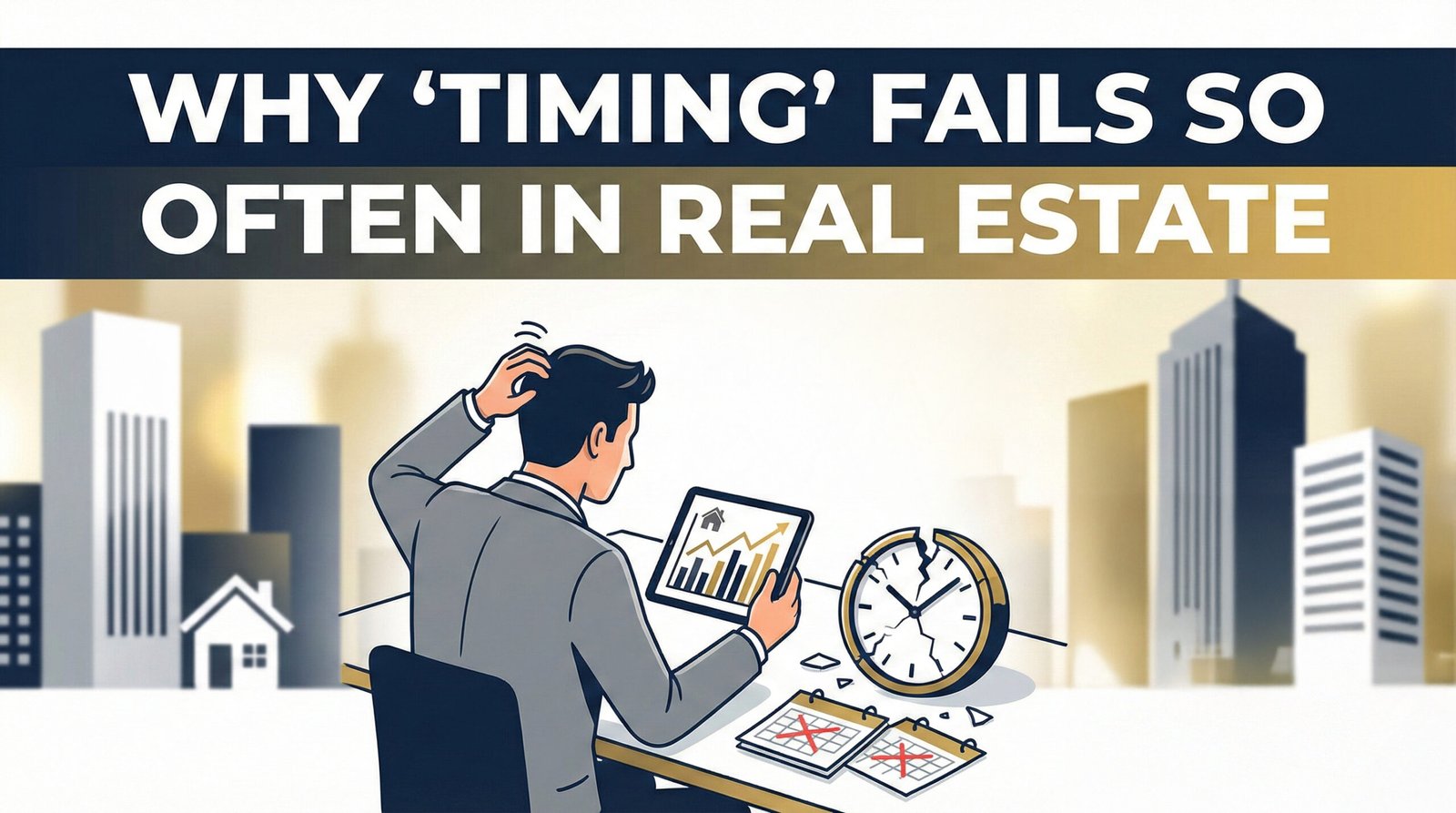
2) Why “Timing” Fails So Often in Real Estate
Human traps that hurt real returns:
- Loss aversion: A small dip feels unbearable, so we sell good assets early.
- FOMO: We chase late—paying peak prices for average assets—then get stuck.
- Story trading: Rumors and “files” can be seductive; they often need perfect timing to work.
- Short horizons: We judge a 10-year asset on a 10-day chart (or a trending reel).
Real estate has friction—transfer costs, taxes, legal work, fit-outs, tenant transitions. Constant in-and-out hurts your pocket and your peace. Time in the Market BEATS Timing the Market says: reduce churn, raise quality, and let rent plus time solve half the problem.
3) The Calm Math of Compounding (Rental + Appreciation)
Let’s keep this simple and directional (not a promise; round numbers).
- Ticket: PKR 20,000,000 into a professionally managed apartment or hospitality key.
- Stabilized net rental yield: ~7–9% = PKR 1.4–1.8M/year before tax.
- Capital growth: ~8–12% per year if the area/brand/operator improves sensibly.
Mid-case after 5 years:
- Value: 20M × (1.10)^5 ≈ 32.2M
- Rent collected (sum): ≈ 8M
- Directional “economic value” vs start: ≈ 40M vs 20M (before costs/tax)
You didn’t chase five flips. You bought once, held, and let the engines run. That’s Time in the Market BEATS Timing the Market in numbers you can feel.
4) Where “Time in the Market” Works Best in Pakistan (Property Types)
A) Urban Serviced Apartments (Lahore/Islamabad/Karachi)
- Why they work: Predictable city demand, business travel, medical tourism, events.
- Your edge: Brand + location + operator SOPs (front desk, housekeeping, maintenance).
- Good for: Investors who want clean statements and hands-free rental.
B) Hospitality/Serviced Keys in Tourism Belts (Murree/Ayubia, Nathiagali, Bhurban)
- Why they work: Weekends/holidays push occupancy; destination upgrades increase ADR over time.
- Your edge: Enter pre-season, own a brand-managed unit, and let the first 2–3 seasons prove your yield.
C) Mid-Market City Rentals (family apartments near schools/hospitals)
- Why they work: Permanent, practical demand; lower vacancy risk.
- Your edge: Good tenant screening, fair rent escalations, steady upkeep.
D) Co-Ownership in Branded Hospitality
- Why it works: Smaller ticket to access a professionally run asset; you can scale once you see real statements.
- Your edge: Stay invested with zero babysitting and add tranches later.
Bottom line: These are all “operate-while-you-hold” assets. If you pick quality, time does much of the compounding.
5) The Investor’s Playbook (Step-by-Step, Only Real Estate)
-
Pick your lane:
- Urban serviced apartment?
- Tourism hospitality key?
- Family rental in a strong school/medical catchment?
Choose one to start.
-
Right-size your ticket:
If you’re new, co-ownership or a smaller unit is smart. You can always scale after a year of statements.
-
Stress-test payments:
Can you carry installments if rent is soft for 3–6 months? If not, pick a gentler plan. (Time in the Market BEATS Timing the Market only works if you can stay in.)
-
Choose operator over brochure:
Ask for SOPs, fee waterfall, sample owner statements, payout cadence, blackout rules, and capex plan.
-
Buy pre-season (for tourism keys):
Better choice, calmer pricing, stronger first-season runway.
-
Keep paperwork immaculate:
Titles, agreements, rent slips, tax files—organized documents increase resale liquidity.
-
Upgrade lightly, regularly:
Small refreshes (paint, fixtures, linen) support ADR and reduce vacancy.
-
Measure what matters:
- Occupancy (days sold / days available)
- ADR (average daily rate)
- RevPAR (ADR × occupancy)
- Net yield (after operator fees, routine costs)
-
Hold through seasons:
Don’t judge a year-round asset by one weak month.
-
Reinvest a slice of rent:
Into maintenance and small improvements each year; this keeps performance compounding.
6) Pricing Patterns You Can Actually Use
- Tourism belts: Expect peaks (holidays, spring–autumn), shoulders (cool seasons, school terms), and soft weeks (mid-monsoon). Time your purchase before the busy arc; time your refreshes just after it.
- Urban hubs: Weekday business demand + weekend families; events and medical flows stabilize occupancy. Proximity to hospitals, universities, and transport nodes matters more than distant “future plans.”
- View & floor premiums: In both city and hills, view corridors and mid-to-high floors often command higher ADR and resale. Pay sensible premiums only when operator and guest flow justify them.
Remember: Time in the Market BEATS Timing the Market says you don’t need the cheapest key—you need the best-run key you can hold comfortably.
7) The One-Page Operator Checklist (Don’t Skip This)
- Track record: Delivered and operating? For how long?
- SOPs: Front desk, housekeeping cycles, maintenance SLAs, linen standards.
- Owner economics: Fee waterfall, revenue split, blackout days, reserve funds.
- Reporting: Monthly statements, payout schedule, auditability.
- Capex plan: Who pays what, when? How do upgrades get approved?
- Resale support: Process, documentation help, and buyer matching.
If any answer is foggy, price that risk in—or walk away.
8) Payment Plans, Leverage, and Sleep
Good leverage can accelerate your compounding. Bad leverage breaks good assets. Keep it boring:
- Choose an installment plan you can carry with or without rent for a while.
- Avoid short “balloon” shocks that force fire sales.
- If adding leverage, keep clear buffers for rate changes and surprise expenses.
- Remember: Time in the Market BEATS Timing the Market only pays if you can stay invested to collect the rent and the appreciation.
9) Risk—Handled Like a Grown-Up
- Execution risk: Prefer delivered/near-delivered or truly credible delivery plans.
- Policy risk: Rules evolve; keep a buffer.
- Liquidity risk: Good papers = easier exit.
- Concentration risk: Don’t put everything in one project or one city.
- Operational risk: A weak operator turns a great location into average results.
You can’t remove risk. You can choose it—and manage it so time becomes your ally.
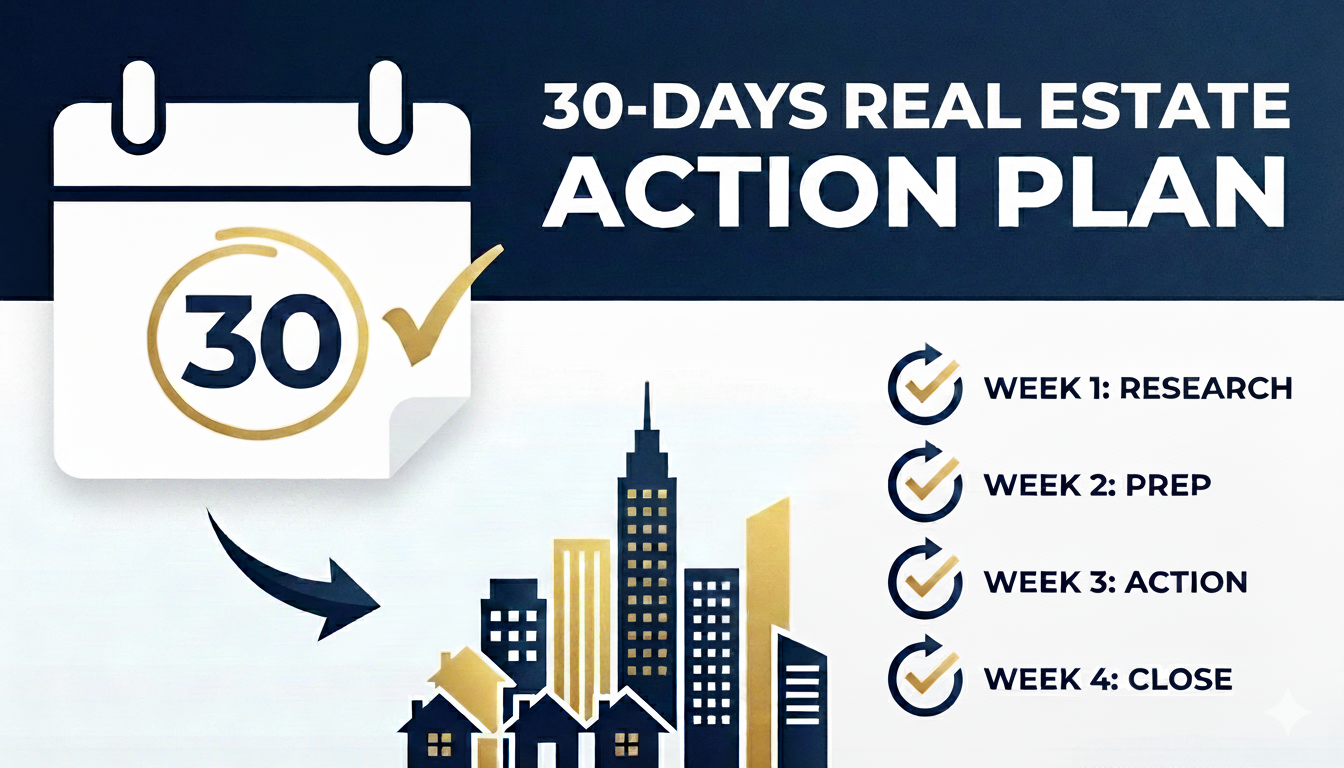
10) The 30-Day Real Estate Action Plan (Only What You’ll Actually Do)
Week 1
- Decide your lane (urban serviced / tourism hospitality / family rental).
- Fix your maximum monthly outflow (installments + buffer).
Week 2
- Shortlist two projects that meet your lane.
- Ask for: SOPs, fee waterfall, sample owner statement, payout calendar, and capex policy.
Week 3
- Visit the site (or get a trusted walkthrough).
- Meet management; ask how they lift ADR and reduce vacancy in soft weeks.
- Check title/approvals with a property lawyer.
Week 4
- Choose the unit stack (view, floor, noise exposure).
- Lock terms you can hold comfortably.
- Set a simple maintenance plan and schedule small refreshes.
On day 30 you’re not “waiting to start”—you’re a landlord with a plan.
11) FAQs (Very Short, Very Real)
Q: What if I buy and bookings dip?
A: That’s normal. Seasonal assets have soft weeks. Hold steady; use operator promos; refresh the unit; let next season average it out.
Q: Is co-ownership safe?
A: With the right contracts and a reputable operator, it’s a sensible on-ramp. Read the fine print on usage, payouts, and exits.
Q: Should I buy a cheaper unit far away or a smaller unit in a prime, managed building?
A: Smaller prime + managed usually wins over time. Rental records beat empty promises.
Q: How long is “long term”?
A: Think in seasons and cycles. Five years is a start; 7–10 years is where compounding shines.
Conclusion: Build What You Can Hold—Then Hold It
Real estate rewards builders of habits, not hunters of headlines. If you choose well-run, well-located assets, keep your payments comfortable, and maintain your unit, time does much of the work: rent shows up, areas mature, and values rise. That is the quiet logic behind Time in the Market BEATS Timing the Market.
Start small if you must. Use co-ownership or a smaller serviced unit. Let one full year of statements teach you more than a thousand hot takes. Then scale with confidence. In five years, you won’t remember the week you entered—you’ll remember that you entered, stayed, and compounded.
Next step: shortlist two projects that match your lane, ask for operator SOPs and owner statements, and lock a unit you can hold with ease. That’s how you turn a principle into property wealth.
Muhammad Ahmad
Chief Business Officer at Imlaak
- Mobile: +92 300 2048048 (WhatsApp)